

Executive Summary:
NetSuite 2026.1 is one of Oracle's most comprehensive ERP updates, focusing on AI-driven automation and tighter security. Key highlights include the AI-powered Close Manager, rule-based pricing, and consigned inventory management. Deploying between February and April 2026, it mandates critical transitions from legacy TBA authentication and NetSuite.com data sources, requiring proactive planning for all organizations.
Following the same biannual cycle as the 2025.2 release, this new update will deploy in multiple phases, with most organizations scheduled to receive the 2026.1 release between February and April. You can check the full release notes following this link - or keep reading below to see some of the most impactful changes coming with this release:
Accounting and Financial Management: Precision Across Every Book
- Custom GL Lines Plug-in: Secondary Book Support
The Custom GL Lines Plug-in now executes for secondary accounting books, not just the primary subsidiary. Organizations running multi-book accounting will see consistent GL behavior across all books without manual workarounds. - Journal Entry Posting Period Update
Users can now change the posting period on journal entries that are still pending approval. This removes a step that previously required approval before any period correction could be made. Admins should review any existing scripts or workflows that touch this field to confirm they still behave as expected.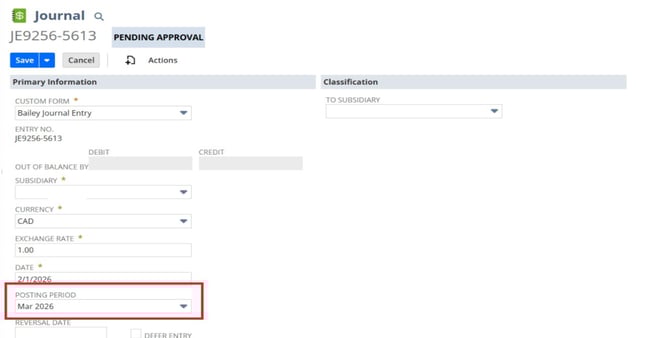
- Intercompany Elimination Improvements
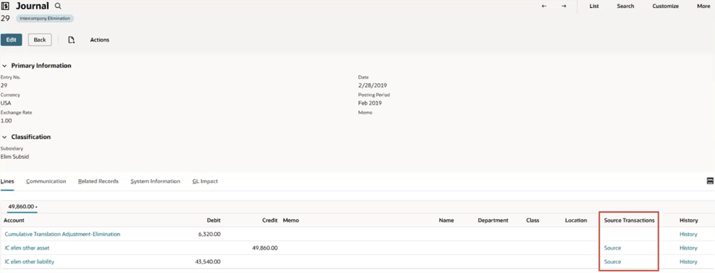
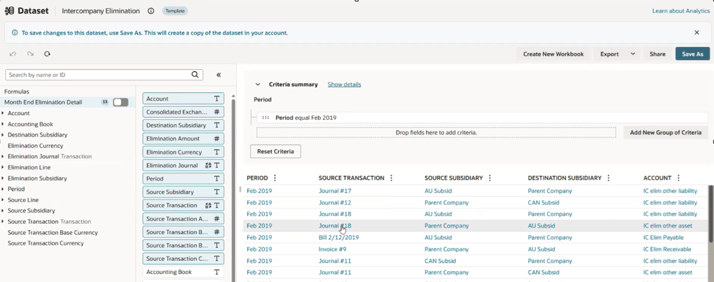
Source transactions for elimination journal entries are now visible for all balance sheet accounts, including Other Assets and Liabilities. A new SuiteAnalytics dataset supports deeper reporting on elimination entries and their underlying transactions.
Artificial Intelligence: The Close Manager Changes the Game
- AI-Powered Close Manager Dashboard
The standout feature of 2026.1, the Close Manager is a new dashboard portlet that brings accounts receivable, accounts payable, and other close-related tasks into a single view, with exception detection, KPI tracking, and forecasted activity. Finance teams managing a monthly or quarterly close across multiple subsidiaries gain earlier visibility into what is off track.
The Close Manager is the clearest signal in 2026.1 that NetSuite is embedding AI into core financial workflows rather than positioning it as an add-on. For teams that currently manage close checklists in spreadsheets or rely on manual AP/AR reconciliation, this is worth evaluating in the first cycle after upgrading.
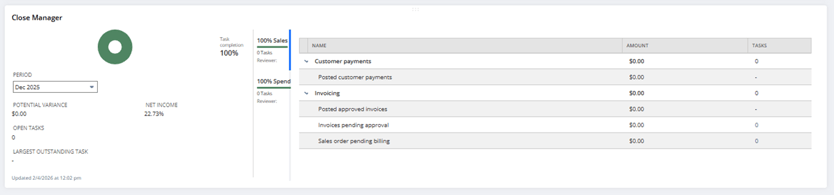
"For our ContinuedSuccess support clients, the Close Manager dashboard is the highlight of this release. Most finance teams are still coordinating period-end close with spreadsheets and follow-up emails. Having that consolidated view natively inside NetSuite, with AI surfacing exceptions and projected activity, means fewer missed steps and faster closes. That is an immediate operational win."

Red Magbojos
ContinuedSuccess Practice Manager
Authentication and Security: Tighter Controls, Clear Deadlines
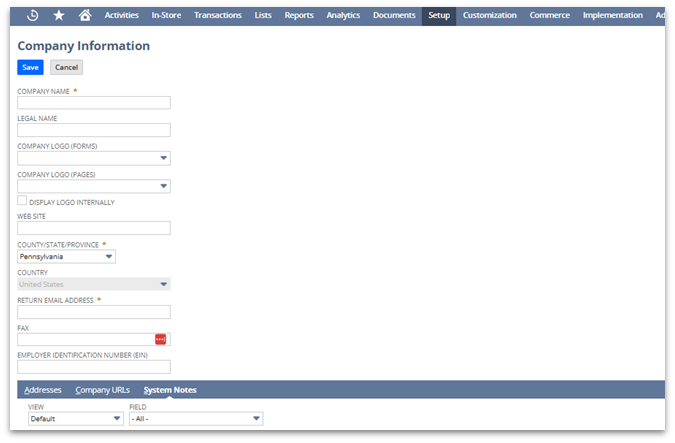
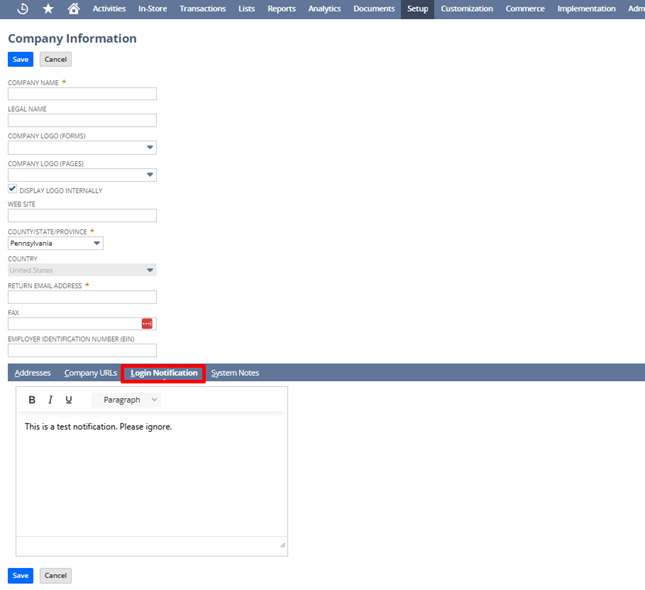
- Login Notification Messages
Administrators can now configure a login message that users must acknowledge before accessing the account. For compliance tracking, these acknowledgments are fully logged, complete with timestamp and user identity, in the Login Audit Trail.
Disabled Feature
Enabled Feature
- Integration Certificate Limit
Each integration record is now capped at five active certificates. Revoked certificates remain unlimited. Organizations with a high volume of integration records should audit active certificates before the update arrives. - Multiple Sessions Now Require 2FA
Running multiple simultaneous NetSuite sessions now requires roles that enforce Two-Factor Authentication. Administrators must re-enable this feature after upgrading. - OAuth Redirect URI and Certificate Rotation
Integration records now support multiple Redirect URIs for OAuth 2.0 authorization code grant flows. New API endpoints support certificate management via code: GET to list, POST to create, POST to revoke. - PKCE Becomes Mandatory in 2027.1
PKCE will be required for OAuth authorization code grant flow beginning with NetSuite 2027.1. Previously optional for non-public clients, this change affects any integration built without it. - Token-Based Authentication (TBA) Deprecation in 2027.1
New integrations will not be permitted to use TBA starting in 2027.1. This applies to SOAP web services, REST web services, and RESTlets. Existing integrations continue to function; new builds should plan accordingly now.
The TBA deprecation timeline gives teams roughly a year to evaluate integrations built on legacy authentication patterns. If your organization has custom SuiteScript integrations or third-party connectors using TBA, this is the right time to flag them for review. Techfino's ContinuedSuccess program includes periodic integration health checks for clients managing complex connector environments.
Banking and Payments: Smarter Imports, Predictive Visibility
- Enhanced Email Notification Controls for Bank Imports
You now have improved flexibility and visibility into how email notifications are sent for both automatic imports and file uploads. - Transaction Import Start Date
Users can specify the exact start date for importing bank transactions into GL accounts, removing the previous dependency on provider defaults. - Flexible Import Scheduling
Bank import schedules can now be customized with specific frequency, interval, start date, start time, and time zone settings. Previously, NetSuite controlled schedule definitions automatically. - AI Payment Date Prediction
NetSuite can now predict when invoices will be paid, based on historical payment behavior. Predicted Payment Date, Predicted Overdue Days, and Prediction Availability fields are available as optional additions. Teams focused on cash flow forecasting have a new data point to work with here. - Standardized Import Error Codes
The Banking Import History page now displays standardized error codes across import-level, account-level, and parser plug-in errors, replacing inconsistent messaging that made diagnosis difficult.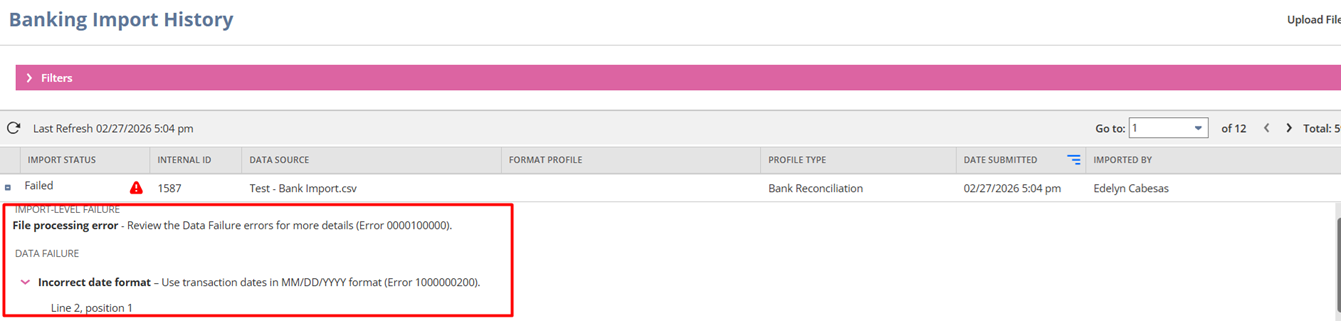
Inventory Management and Supply Chain: New Ground for Consignment and Planning
- Consigned Inventory Management
2026.1 adds dedicated support for tracking vendor-owned inventory stored in company warehouses. This includes separate accounting for asset accounts and cost of goods sold, and works with regular, lot-numbered, and serialized items. Organizations in wholesale distribution or manufacturing that manage consignment programs will find this addition addresses a long-standing gap. Keep in mind that this initial rollout does not yet support Assembly Items or the NetSuite WMS SuiteApp. - Supply Chain Planning Results Workbook
A new workbook template provides visibility into supply vs. demand, pegging dataset insights, and cross-operation planning analysis. - Kit Item Availability Page
A new Earliest Item Availability page for kit items improves inventory visibility across locations and supports better order planning for kit-heavy product lines.
Warehouse and Mobile Operations: Fewer Corrections, More Control
- WMS Enhancements
This update focuses on precision in the warehouse. Key improvements include the ability to receive goods using estimated or actual landed costs, as well as the option to reverse inbound shipment receipts to fix errors immediately. Additionally, new inventory search capabilities for kit and package items and real-time backorder visibility during picking help teams maintain flow. For high-volume operations, these changes directly translate to fewer manual corrections and tighter control over stock movement. - SCM Mobile Updates
The SCM mobile framework adds iOS browser support, dynamic label fields using expressions, toggle switch UI components, conditional mandatory fields, and image and file compression settings. These improve the usability of mobile workflows without requiring custom development.
Pricing: A New Rule-Based Engine Built for Scale
- Advanced Pricing Rules
A new rule-based pricing engine allows dynamic pricing configurations based on customer or customer group, item, date range, and price level. Rules apply to sales orders, cash sales, estimates, invoices, credit memos, and return authorizations.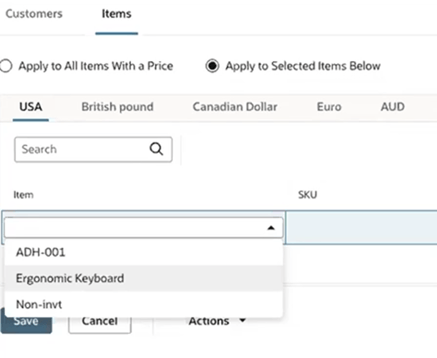
- Cost Plus Pricing
Pricing can now be calculated as a markup or discount from Average Cost or a custom cost field. This gives distribution and manufacturing businesses a flexible alternative to static price lists. - Transfer Order Cost Preference
Transfer orders now support Use Item Cost as Transfer Cost for items on the Standard Costing method.
Order Management and Shipping: Compliance, Speed, and Next-Gen Scanning
- FedEx REST MFA Requirement
FedEx REST integration now requires Multi-Factor Authentication during account registration. Existing accounts must be re-registered before the update. Check with your shipping coordinator before the upgrade window. - Ship Central: 8 New Enhancements
Updates include GS1 and HIBC barcode scanning, shipping to pickup or drop-off service points, bulk shipping for large carton volumes, third-party billing configuration, and the ability to charge list rates while paying negotiated carrier rates. - NetSuite Pay Visa CEDP Compliance
NetSuite Pay version 1.0.26 now meets Visa Commercial Enhanced Data Program requirements, which include line item descriptions, quantities, unit prices, SKU codes, shipping data, and merchant tax identifiers.
Project Management: Bulk Editing and Faster Revenue Visibility
- Bulk Task Editing
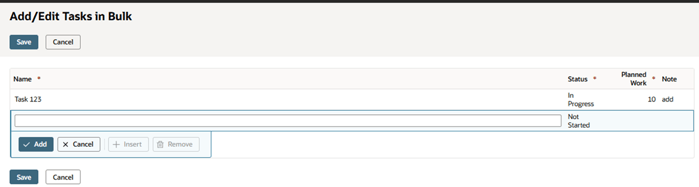
Project tasks can now be added inline during project creation and edited in bulk via an inline table. This removes a step that previously required individual task saves.
- Revenue Recognition from Project Record
Revenue recognition can now be recalculated directly from the project record page, improving transparency and reducing troubleshooting time on deferred revenue schedules.
Analytics and Developer Tooling: AI in the IDE, One Migration You Can't Skip
- NetSuite.com Data Source Removed
The legacy NetSuite.com data source in SuiteAnalytics has been removed. Organizations that have not yet migrated to NetSuite2.com must do so now. This was flagged as a migration requirement in the 2025.2 release notes. - SuiteCloud Developer Assistant
A new AI coding assistant for SuiteCloud development integrates with Visual Studio Code. It provides context-aware suggestions, automatic generation of SuiteScript 2.1, and XML custom object generation. Prerequisites: SuiteCloud VS Code Extension and the Cline Extension. - REST API Enhancements
New operations include attach/detach record relationships, homogeneous batch operations, a create-form operation, and a selectOptions operation. Batch operations run asynchronously and reduce server load. - SuiteApp Control Center APIs
New REST APIs support automated SuiteApp management: initiating releases, monitoring deployments, rolling back versions, and integrating with CI/CD pipelines. - Continued SOAP Deprecation
The 2025.2 endpoint was the final planned SOAP release; future endpoints will be created only by exception. Organizations using SOAP-based integrations should audit their current status now and begin planning migration paths to REST Web Services to ensure long-term compatibility.
Taxation (SuiteTax): Location-Aware Nexus and Automated Discount Tax
- Line-Level Location for Nexus
SuiteTax now considers item-level locations when determining tax nexus, replacing the previous behavior of using only the transaction header location. All item lines must share the same nexus; otherwise, separate transactions are required. - Tax on Term Discounts
Tax adjustments can now be automatically generated when early payment discounts are applied. The system creates credit memos covering both the discount amount and associated tax.
Procurement and Commerce: Multi-Vendor Flexibility and Smarter Recommendations
- SuiteProcurement: Multi-Vendor Requisitions
Requisitions now support multiple vendors per request, and partial item receipts are available alongside improvements to default category configuration and purchase order accuracy. - Bill Capture Preview
Users can now preview scanned vendor bill documents directly from the browser before committing them. - Commerce: Inventory-Filtered Recommendations
Item recommendations can now be filtered to show only available inventory. The recommendation button has been renamed to "Alternative Items" in the Redwood theme update.
Why This NetSuite Product Release Matters
Rather than relying on a single flagship feature, 2026.1 provides a broad set of targeted improvements across nearly every functional area of the platform. The Close Manager offers the most immediate ROI for multi-entity finance teams, while the consigned inventory module finally automates a manual hurdle for distributors. However, the update also includes long-term technical mandates; the security shifts toward TBA and PKCE require proactive planning now to ensure a smooth transition before 2027.1.
What carries through this release, as it did in 2025.2, is NetSuite's consistent direction: more AI embedded in daily workflows, tighter integration standards, and incremental improvements that reduce manual steps across finance, operations, and fulfillment.
"Most release updates are incremental, and that is fine. But the AI-powered Close Manager is worth paying attention to. It is one of the first places where NetSuite is embedding intelligence directly into a core financial workflow, not as an add-on, but as part of how the system thinks about period-end close. That is a meaningful shift."

Olivier Gagnon
NetSuite Practice Manager
Next Steps:
- Audit integrations using Token-Based Authentication and flag any that need to migrate before 2027.1.
- Migrate SuiteAnalytics workbooks to the NetSuite2.com data source if not already done.
- Re-register FedEx REST accounts before the upgrade window if your team uses FedEx shipping.
- Review the posting period change on journal entries against any scripts that touch that field.
- Review Close Manager and evaluate it against your current period-end workflow.
- Assess consigned inventory capabilities if your operation manages vendor-held stock.
Is Your Team Ready for NetSuite 2026.1?
The 2026.1 release rewards organizations that move early. The teams that audit their TBA integrations now, migrate their SuiteAnalytics workbooks, and evaluate the Close Manager before go-live will have a smoother upgrade window and a faster path to value. If you want a second set of eyes on your readiness posture, Techfino's team is ready to help.
Frequently Asked Questions About the NetSuite 2026.1 Release
-
What is included in the NetSuite 2026.1 release?
-
It spans almost every functional area (including accounting, banking, inventory management, and much more), with a feature set led by the AI-powered Close Manager, consigned inventory tracking, a rule-based pricing engine, and expanded OAuth security controls.
-
When does the NetSuite 2026.1 release deploy?
-
Updates roll out in phases between February and April 2026. Check your "New Release" portlet for your specific account’s upgrade date.
-
What is the NetSuite Intelligent Close Manager in 2026.1?
-
The Close Manager is a new dashboard portlet providing a centralized view of period-close tasks, exception detection, and KPI tracking. Enable it via: Setup > Company > Enable Features > Accounting.
-
Is Token-Based Authentication (TBA) being deprecated in NetSuite?
-
Not immediately. Starting with 2027.1, new integrations must use OAuth 2.0 instead of TBA. Existing integrations remain functional, but all new builds should prioritize OAuth.
-
What changed in NetSuite 2026.1 for consigned inventory?
-
A new module allows tracking vendor-owned stock in your warehouses with separate accounting for assets and COGS. Note: It does not currently support Assembly Items or NetSuite WMS.
-
What is the advanced pricing feature in NetSuite 2026.1?
-
A rule-based engine for dynamic pricing based on customer groups, date ranges, or cost-plus markups. It applies across all sales and return transactions.
-
Do I need to migrate away from the NetSuite.com data source in SuiteAnalytics?
-
Yes. The legacy NetSuite.com source is removed in 2026.1. All workbooks and reports must be migrated to NetSuite2.com immediately.
-
What is the SuiteCloud Developer Assistant introduced in 2026.1?
-
The SuiteCloud Developer Assistant is an AI tool for VS Code that generates SuiteScript 2.1 and XML objects. It requires the SuiteCloud and Cline extensions.
-
What changed in SuiteTax in the NetSuite spring 2026 update?
-
Nexus is now determined by item-level locations rather than the transaction header. Additionally, early payment discounts now trigger automatic tax adjustments.
-
How should Techfino clients prepare for the NetSuite 2026.1 release?
-
Key short-term actions include: audit TBA integrations, confirm the move to NetSuite2.com, re-register FedEx REST accounts, and review scripts affecting posting periods. If you or your team are worried about your pre-release readiness, you can contact Techfino for a readiness assessment.